Loot Bash

Hello again, readers. I hope you all had a happy and restful holiday season and are holding up under whatever fresh hell this new year has already been.
I’ve been quiet these last couple of months partly because most of my time has been taken up by a side project that I hope to announce shortly (not under a nondisclosure agreement or anything—I just want to move it a little closer to completion before I start yammering about it) and partly because I’m still waiting on certain particulars concerning the release of The Monsters Know What They’re Doing, Revised Edition. That doesn’t mean I haven’t been wanting to get a newsletter issue out, though, and a piece of news I received this morning moved me to get cracking on it.
U.K. designer Chris Bissette, creator of the ingenious solo journaling game The Wretched—which I believe was the first roleplaying game to employ Jenga as a randomizing device, and which inspired many hacks, encouraged by Bissette—announced today that he was giving up on trying to make game design his full-time job.
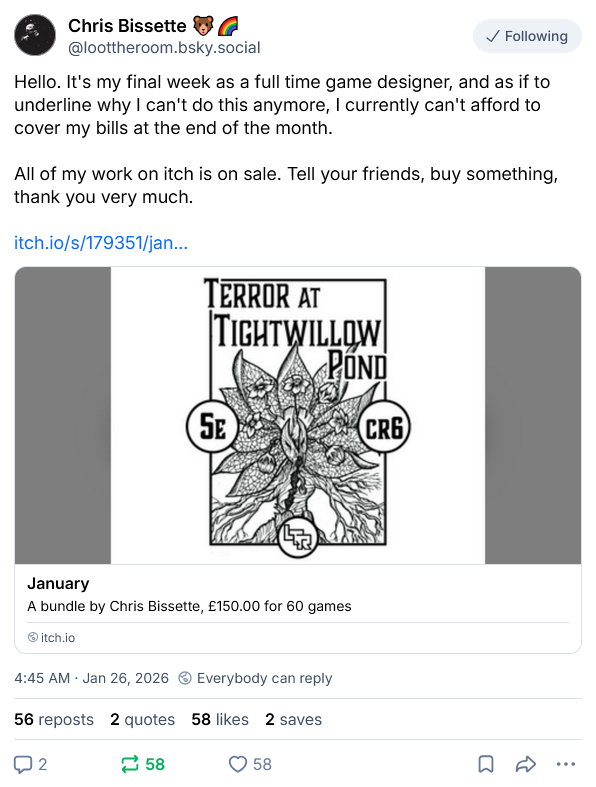
Jokes about the penury of TTRPG designers abound, but it’s always disappointing to learn that an accomplished designer is pulling back from game design because it doesn’t pay the bills. The most deserving creators aren’t necessarily the luckiest, and the luckiest aren’t necessarily the most deserving. That said, when someone who’s been putting out well-regarded content for nearly 10 years arrives at the conclusion that they have to step back because it’s doing them more harm than good, it’s a loss for all of us as well as for them.
Bissette has put all their itch.io products on sale in a last-ditch effort to pay their January bills. As of this writing, they’re already more than one-third of the way there, but I’d like to see them blow past that goal, not merely meet it, so check it out.
They also have a number of products on the Dungeon Masters’ Guild, both solo and anthology. That’s where I first discovered their work—specifically, the excellent one-shot adventure “Bulette Storm.” Somehow I failed to realize until I was already well into running the adventure that it’s a clever pastiche of Jaws, but that made it all the more entertaining, because I’d chosen it to run as a one-shot for a party consisting entirely of halfling bards. More on that in a moment.
Back when Twitter was still Twitter, Bissette once posted that the effective price of a “pay what you want” game was zero, because the number of people who paid anything for it was insultingly small. They finally got fed up and slapped a “FREE!” label across the cover, ending what had come to seem like a pitiful charade. But for that precise reason, I’d like to urge you to head over to the DMs’ Guild and support Bissette by paying a few dollars to download this adventure. And then maybe even try running it the way I did.
At the time, I was running Wizards of the Coast’s Tyranny of Dragons arc for a group of seven players. Generally, we were fine playing with six, but there was going to be a month when two players were going to be out entirely, and rather than put our whole game night on hold, I decided to run a five-player one-shot instead. I came up with the zany idea of having them all be bards, each from a different subclass (this was post-Xanathar’s, pre-Tasha’s, so the number of subclasses worked out neatly), and, moreover, having them all be halfling bards. And doing so with the conceit that they were a band just on the cusp of fame but not quite able to break through, who constantly stumbled into crazy situations while simply trying to please their audiences and maybe find a little love along the way. In other words, essentially, the Monkees.
So what began as Dungeons & Dragons × the Monkees became D&D × the Monkees × Jaws. I mean, who could ask for anything more!
My players ate it up—and took it a step further than I’d imagined, by coming up with the name Second Breakfast Club for their band. I’d named each pregenerated character according to their role in the prefab ’60s-esque rock band (“the Cute One,” “the Smart One,” “the Quiet One,” “the Noisy One”—h/t The Rutles: All You Need Is Cash—and “the Complicated One”) but told the players that their characters’ actual names were up to them. Brody, Andy, Penny, Perry and the Quiet One who was so quiet that not even their own player can remember what his name was went down in musical, and D&D, history.
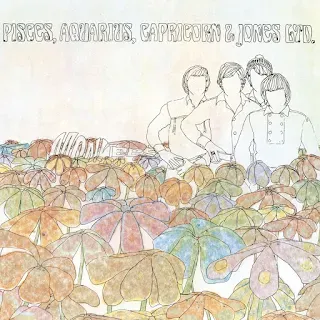
Since then, I’ve trotted Second Breakfast Club out again for games at conventions, both “Bulette Storm” and a subsequent one-shot featuring the mutant fish-creature from The Host and several other prefab bands, and it’s always (if you’ll pardon the pun) a monster hit. So please feel free to download the Second Breakfast Club character sheets attached below and use them in a game of your own, and enjoy the typographical shout-out to the album cover of Pisces, Aquarius, Capricorn & Jones Ltd.
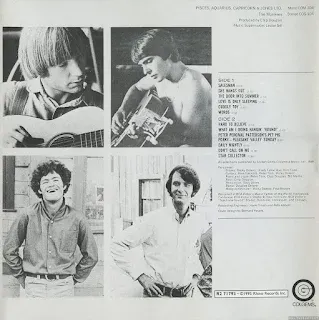
Just one stipulation: They can never, ever, advance past level 4.
Upcoming Appearances
Regretfully, owing to an 11th-hour mixup over vendor insurance requirements, I decided to withdraw from Capricon. However, I’m still attending GameStorm in Portland, Ore., March 19–22. I’m running two games, one D&D and one Cypher System (alas, neither of them involving Second Breakfast Club), along with a two-hour, participatory monster design workshop. Badge sales are live; click the link above to buy yours.
Just a Little Something Extra
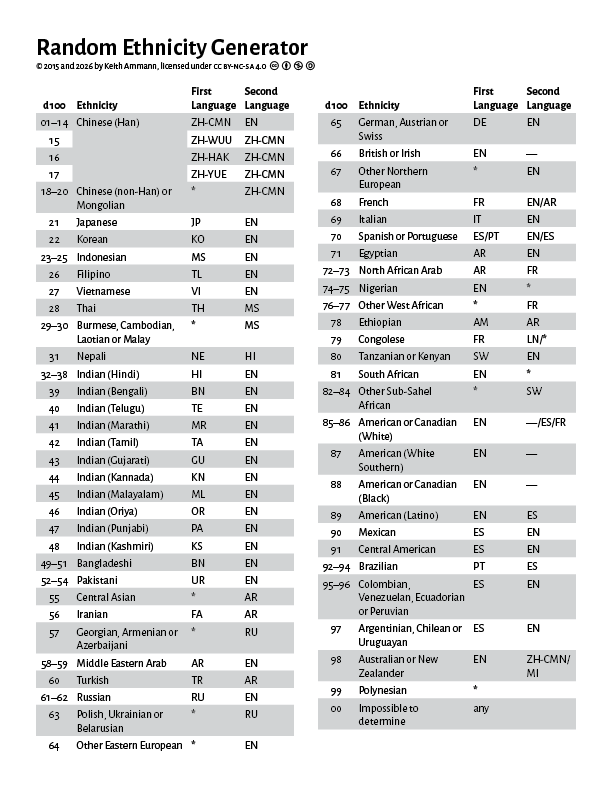
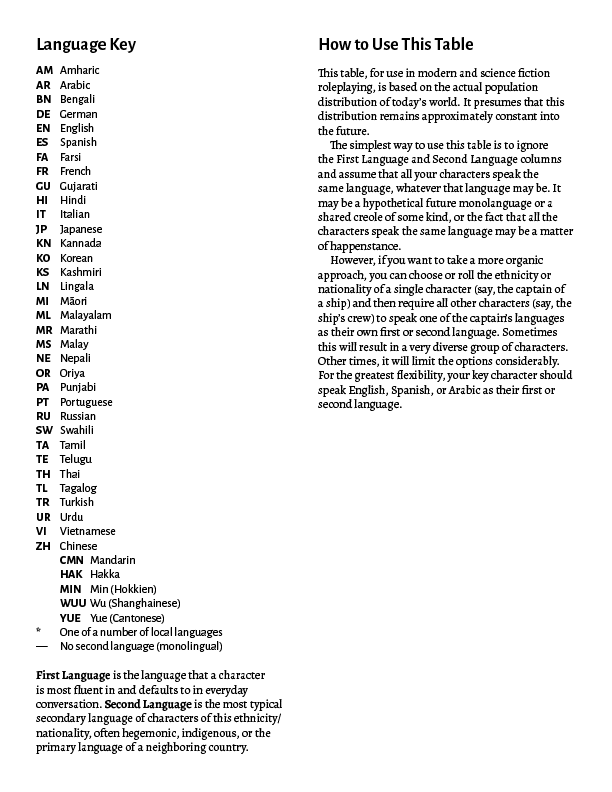
Playing a game of modern-day intrigue with an international cast of PCs and NPCs? Have a spaceship you’d like to populate with a multicultural crew? Here’s a random table I created about 10 years ago, based on the actual population distribution of today’s world. A printable PDF is attached below.
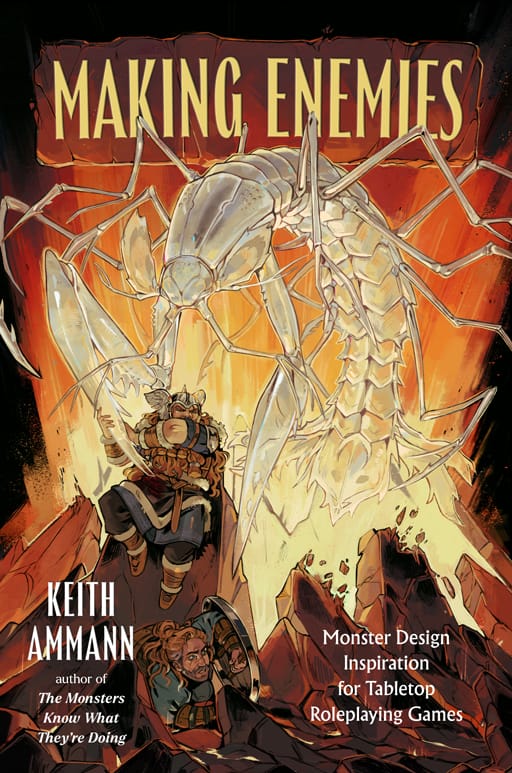
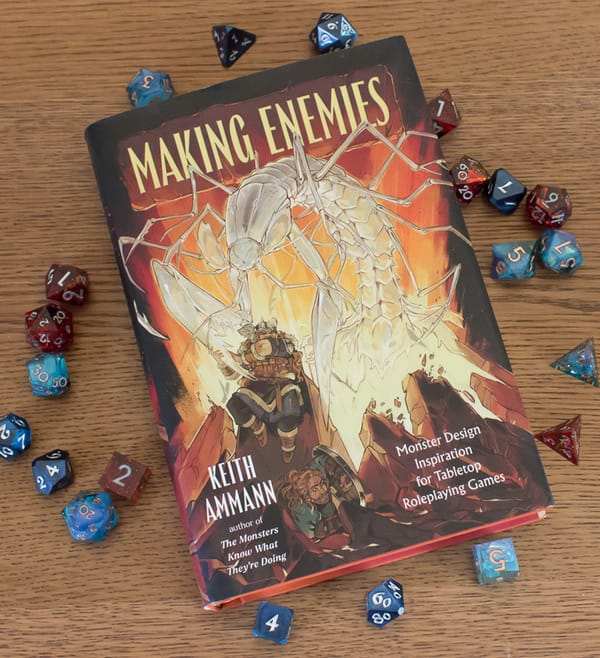
In The Monsters Know What They’re Doing, the essential tactics guide for Dungeon Masters, and its sequel, MOAR! Monsters Know What They’re Doing, I reverse-engineered hundreds of fifth edition D&D monsters to help DMs prepare battle plans for combat encounters before their game sessions. Now, in Making Enemies: Monster Design Inspiration for Tabletop Roleplaying Games, I explore everything that goes into creating monsters from the ground up: size, number, and level of challenge; monster habitats; monster motivations; monsters as metaphors; monsters and magic; the monstrous anatomy possessed by real-world organisms; and how to customize monsters for your own tabletop roleplaying game adventuring party to confront. No longer limited to one game system, Making Enemies shows you how to build out your creations not just for D&D 5E but also for Pathfinder 2E, Shadowdark, the Cypher System, and Call of Cthulhu 7E. Including interviews with some of the most brilliant names in RPG and creature design, Making Enemies will give you the tools to surprise and delight your players—and terrify their characters—again and again.
Order today from your favorite independent bookseller, or click one of these links:
Spy & Owl Bookshop (hi it me) | Barnes & Noble | Indigo | Kobo | Apple Books | Libro.fm | Audible